

Have you ever wondered why English speakers say “make a mistake” but “do homework”? In Korean, both make and do can often be translated as “하다.” So it is very natural for Korean learners to feel confused.
- I made a mistake. (나는 실수했다.)
- I did my homework. (나는 숙제를 했다.)
Both sentences may feel like “I did something” in Korean, but in English, the verb changes depending on the object. Today, let’s look at the difference between make and do through the basic sentence pattern: S + V + O (Subject + Verb + Object / 주어 + 동사 + 목적어).
1. Why do English learners confuse make and do?
English learners often confuse make and do because both verbs are connected to actions. In Korean, we say: 실수하다, 숙제하다, 결정하다, 운동하다, 계획하다, 노력하다. Many of these expressions use “하다.”
But in English, we do not use only one verb for all of them:
- make a mistake (실수하다) / do homework (숙제하다)
- make a decision (결정하다) / do exercise (운동하다)
- make a plan (계획을 세우다) / do your best (최선을 다하다)
So the important question is not only “What does the verb mean?” The important question is: What kind of object comes after the verb?
2. The basic sentence pattern: S + V + O
The 3rd sentence pattern in English is S + V + O. This means: Someone does something.
Example 1: I made a mistake.
- I = Subject (S)
- made = Verb (V)
- a mistake = Object (O)
Example 2: My son did his homework.
- My son = Subject (S)
- did = Verb (V)
- his homework = Object (O)
Both sentences follow the same pattern, but the verb is different because the object is different. That is the key!
3. Make = to create, produce, or cause something
The verb make is often used when something is created, produced, or caused. In simple words: make = to create something or cause a result (무언가를 만들거나 어떤 결과를 만들어내다)
- I made a cake. (나는 케이크를 만들었다.) $\rightarrow$ A cake is created.
- She made a mistake. (그녀는 실수했다.) $\rightarrow$ A mistake happened as a result of her action.
- We made a plan for the weekend. (우리는 주말 계획을 세웠다.) $\rightarrow$ A plan is created.
So when the object is something like a plan, mistake, decision, promise, or progress, we often use make.
Pattern 1: make + noun
- make a mistake (실수하다)
- make a plan (계획을 세우다)
- make a decision (결정을 내리다)
- make a promise (약속하다)
- make progress (발전하다 / 진전하다)
- make an effort (노력하다)
- I made a mistake in my essay. (나는 에세이에서 실수를 했다.)
- We made a plan for our English study. (우리는 영어 공부 계획을 세웠다.)
- She made an important decision. (그녀는 중요한 결정을 내렸다.)
- He made a promise to call his mother. (그는 어머니에게 전화하겠다고 약속했다.)
- You are making great progress. (너는 큰 발전을 하고 있어.)
- I made an effort to speak English every day. (나는 매일 영어를 말하려고 노력했다.)
Pattern 2: make + someone + adjective
There is another useful pattern with make: to cause someone to feel or become a certain way (누군가를 어떤 상태나 기분이 되게 만들다)
- This song makes me happy. (이 노래는 나를 행복하게 해.)
- The cold weather makes me tired. (추운 날씨는 나를 피곤하게 해.)
- Leo’s cute face makes me smile. (레오의 귀여운 얼굴은 나를 웃게 해.)
4. Common expressions with make
If the object feels like a result, choice, creation, or change, make is often the right verb.
- make a mistake: I made a mistake, but I learned from it. (나는 실수했지만, 그 실수에서 배웠다.)
- make a decision: She made a decision to study abroad. (그녀는 유학하기로 결정했다.)
- make a plan: We made a plan for the summer vacation. (우리는 여름방학 계획을 세웠다.)
- make progress: My English is slowly making progress. (내 영어 실력이 천천히 늘고 있다.)
- make a promise: He made a promise to be more careful. (그는 더 조심하겠다고 약속했다.)
- make a phone call: I need to make a phone call. (나는 전화를 한 통 해야 한다.)
- make money: Many people want to make money online. (많은 사람들이 온라인으로 돈을 벌고 싶어 한다.)
- make an effort: She made an effort to understand the new grammar rule. (그녀는 새로운 문법 규칙을 이해하려고 노력했다.)
5. Do = to perform an action, task, or work
The verb do is often used when we talk about work, tasks, duties, or general activities. In simple words: do = to perform an action or complete a task (일, 행동, 과제, 활동을 하다)
- I did my homework. (나는 숙제를 했다.) $\rightarrow$ Homework is a task.
- She did the dishes. (그녀는 설거지를 했다.) $\rightarrow$ Doing the dishes is housework.
- He did exercise in the morning. (그는 아침에 운동을 했다.) $\rightarrow$ Exercise is an activity.
Pattern 1: do + task/work
- do homework (숙제하다)
- do housework (집안일하다)
- do the dishes (설거지하다)
- do laundry (빨래하다)
- do research (조사하다 / 연구하다)
- My son did his homework before dinner. (내 아들은 저녁 먹기 전에 숙제를 했다.)
- I did housework all morning. (나는 오전 내내 집안일을 했다.)
- She did the dishes after lunch. (그녀는 점심 식사 후 설거지를 했다.)
- I need to do laundry today. (나는 오늘 빨래를 해야 한다.)
- The students did research for their project. (학생들은 프로젝트를 위해 조사를 했다.)
Pattern 2: do + activity
- do exercise (운동하다)
- do yoga (요가하다)
- do business (사업하다)
- do your best (최선을 다하다)
- I try to do exercise three times a week. (나는 일주일에 세 번 운동하려고 노력한다.)
- My friend does yoga every morning. (내 친구는 매일 아침 요가를 한다.)
- Her family does business in Korea. (그녀의 가족은 한국에서 사업을 한다.)
- Just do your best. That is enough. (그냥 최선을 다해. 그걸로 충분해.)
6. Common expressions with do
If the object feels like a task, duty, work, or activity, do is often the right verb.
- do homework: Charles did his homework after school. (찰스는 방과 후 숙제를 했다.)
- do housework: I did a lot of housework on Sunday. (나는 일요일에 집안일을 많이 했다.)
- do the dishes: Can you do the dishes after dinner? (저녁 먹고 설거지해 줄 수 있어?)
- do laundry: I have to do laundry before the trip. (나는 여행 전에 빨래를 해야 한다.)
- do exercise: I feel better when I do exercise regularly. (나는 규칙적으로 운동하면 몸이 더 가뿐해진다.)
- do your best: You don’t have to be perfect. Just do your best. (완벽할 필요는 없어. 그냥 최선을 다해.)
- do research: I did research before writing my essay. (나는 에세이를 쓰기 전에 자료 조사를 했다.)
- do business: He does business with companies in China. (그는 중국 회사들과 사업을 한다.)
7. Make or do? The easiest way to remember
- Make = create or cause something (만들다 / 어떤 결과를 만들어내다)
- Do = perform an action, task, or work (일이나 행동을 수행하다)
English has many fixed expressions, so the best way is to learn them as chunks. Do not memorize only the word mistake. Memorize the full expression: make a mistake. This is how your English becomes more natural!
8. Real-life examples with Leo, Cafe, and Moka
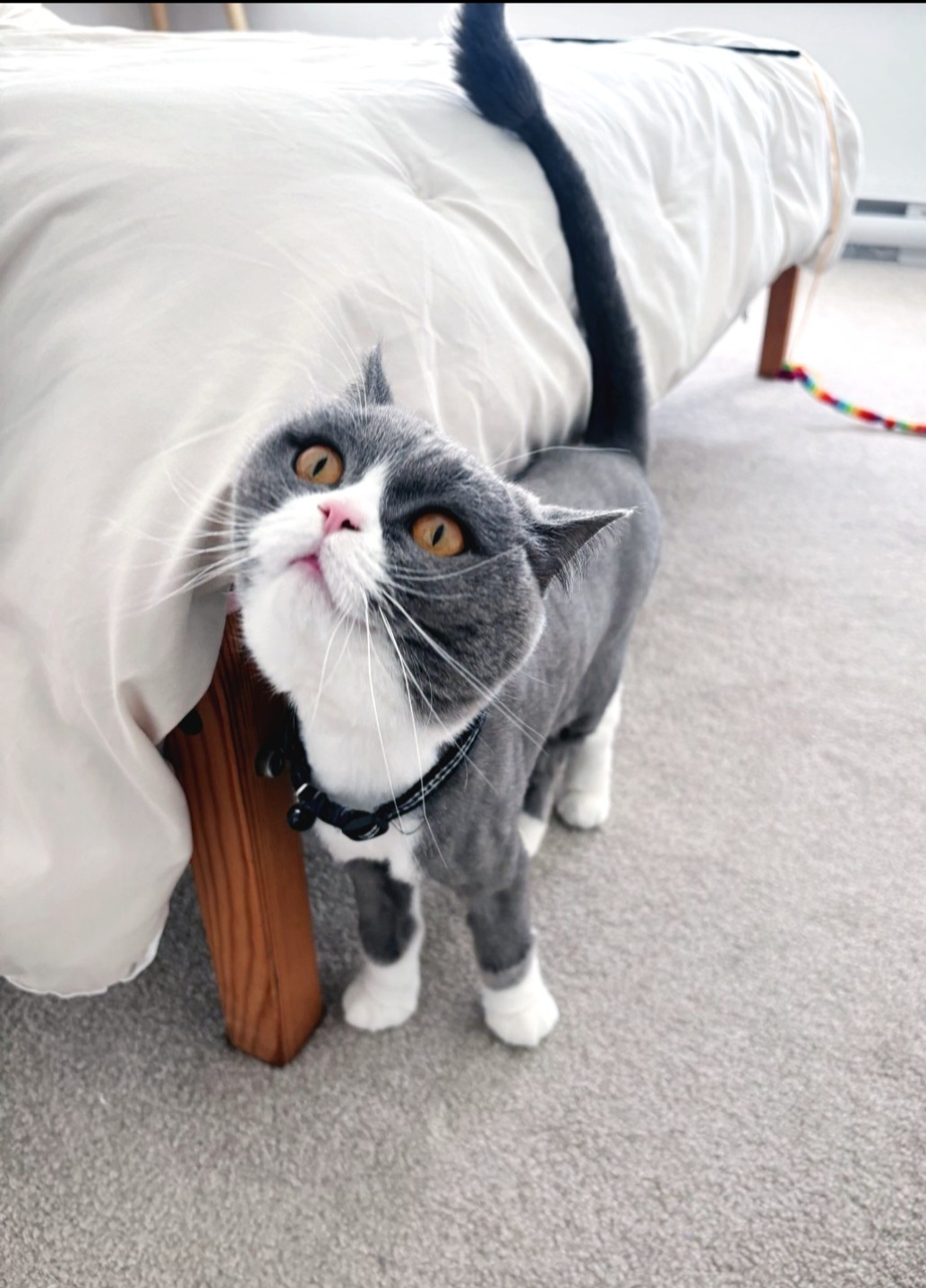
Now let’s see how we use make and do in real life with my lovely pets!
- Leo made a mess in the living room. (레오가 거실을 엉망으로 만들어 놓았다.)
- I did the laundry after cleaning up the mess. (나는 그 난장판을 치운 후 빨래를 했다.)
- Cafe made a strange sound when she saw Leo. (카페는 레오를 보고 이상한 소리를 냈다.)
- Moka made a decision to ignore everyone. (모카는 모두를 무시하기로 결정했다.)
- I did my best to take a cute photo of them. (나는 그들의 귀여운 사진을 찍으려고 최선을 다했다.)
- Leo made me smile again. (레오가 또 나를 웃게 만들었다.)
9. Quick Summary
| Verb | Basic Meaning | Korean Meaning | Common Expressions |
| make | create, produce, or cause | 만들다 / 결과를 만들다 | make a mistake, make a plan, make a decision, make progress |
| do | perform an action, task, or work | 하다 / 수행하다 | do homework, do housework, do exercise, do your best |
📝 Mini Writing Challenge
Now it is your turn! Write 5 sentences using make or do. Try to use at least three expressions from today’s lesson. You can write about your daily life, your family, your pets, or your study routine.
Writing Prompts:
- Write one sentence with make a mistake.
- Write one sentence with make a plan.
- Write one sentence with do homework.
- Write one sentence with do your best.
- Write one sentence about your pet, child, or daily life using make or do.
Sample Answers:
- I made a mistake in my English sentence, but I fixed it. (나는 영어 문장에서 실수했지만 고쳤다.)
- We made a plan to study English every morning. (우리는 매일 아침 영어를 공부할 계획을 세웠다.)
- My son did his homework before playing basketball. (내 아들은 농구를 하기 전에 숙제를 했다.)
- I did my best, even though the test was difficult. (시험이 어려웠지만 나는 최선을 다했다.)
- Leo made a mess, but he looked too cute to scold. (레오가 난장판을 만들었지만 너무 귀여워서 혼낼 수 없었다.)
Final Thought
In English, make and do are not just two versions of “하다.” The object after the verb determines everything. When you learn English expressions as full chunks, your sentences become much more natural.
블로그에 글이 올라가면 이웃분들이 예문 속 귀여운 아이들(레오, 카페, 모카) 이야기 덕분에 더 즐겁게 공부할 수 있을 것 같아요. 혹시 더 수정하고 싶거나 추가하고 싶은 표현이 있으시면 언제든 말씀해 주세요!